10 Speaking Tips You Can Apply Right Now
May 12, 2026
I’ve been a professional speaker for nearly 15 years now. And I love it. Honestly, nothing beats the adrenaline of being on stage and the joy of connecting with a whole room of people. Even though I consider myself an accomplished speaker (international speaking gigs, keynote addresses, countless workshops and trainings, etc.), there’s still so much more to learn.
Whether I'm working with a speaking coach privately, attending a webinar or conference on the topic, or engaging with my Talkadot community (of over 10,000+ other speakers), I am constantly investigating ways to level up.
While certainly not exhaustive, here are 10 tips from a National Speaker Association conference I attended that are super simple and applicable right away for my speaker readers. I encourage you to try them out for yourself.
1. Don’t quote others who are alive and well.
Well, here I am already breaking the advice of Dr. Delatorro McNeal II by quoting him! He reminded the audience that we are good enough just as we are. It might not be overnight that we get more comfortable telling our stories, but swapping out quotes from contemporaries is a great first step.
2. Speak to the decision-makers, not the doers.
Angelique Rewers hit the nail on the head. It’s time to step into the shoes of our buyers and think about what they need. After hearing this and seeing Angelique’s examples, I immediately reworked all my talk titles to speak more clearly to decision-makers.
3. Always end with a story.
We’ve all been to talks that end in FAQs. Nothing necessarily wrong with that, but Jon Gordon’s point was that great speakers leave the audience with something to remember. I love this. Even if you do take questions, save a minute or two to capture your listeners’ minds and thoughts one last time.
4. Compliment the previous speaker and make a connection.
Such a classy piece of advice from Marc Scharenbroich. He challenged us to make the introducer look great and even weave in what they said to the talk. I’m all about building people up!
5. When you’re telling a story, add the date and year for context.
Lenora Billings-Harris is a fantastic storyteller, and she gave us this simple tip: get specific. When people have a clear idea of the time and place, they’ll be more engaged in the story.
6. Write stories as if they’re meant to be told, not read.
What a great reminder from Kelly Swanson. Our natural inclination is to write for readers, not for listeners. I’m going to work on speaking my stories as I write them to make sure they sound natural when they’re spoken.
7. Use words that sound like action.
Everything Tim Gard said was pure gold—including this tip. He used the example of “erupted” to illustrate what he meant. I’m motivated to go back through my talks and swap out passive verbs for active ones that also sound energetic.
8. Don’t ever take a speaking engagement that doesn’t allow you to be who you are.
Wise words from Connie Podesta! Audiences can sniff out inauthenticity. It’s so okay to say “no” to an opportunity if it doesn’t fit you or prevents you from being yourself.
9. Share little stories that illustrate your points.
As Jeanne Robertson reminded me, we have narrative minds. Your audience is more likely to understand what you’re trying to communicate—and remember it—when you attach a brief story to your key messages.
10. Study humor.
Don Hutson is the National Speaker Association’s longest-living member. (He’s been at 49 of the past 50 annual conferences!) I loved this piece of advice. Take notice when things make you laugh and examine why.
I’ve accepted that in life and in speaking, there’s always room to improve. It's a never-ending loop of development and commitment.
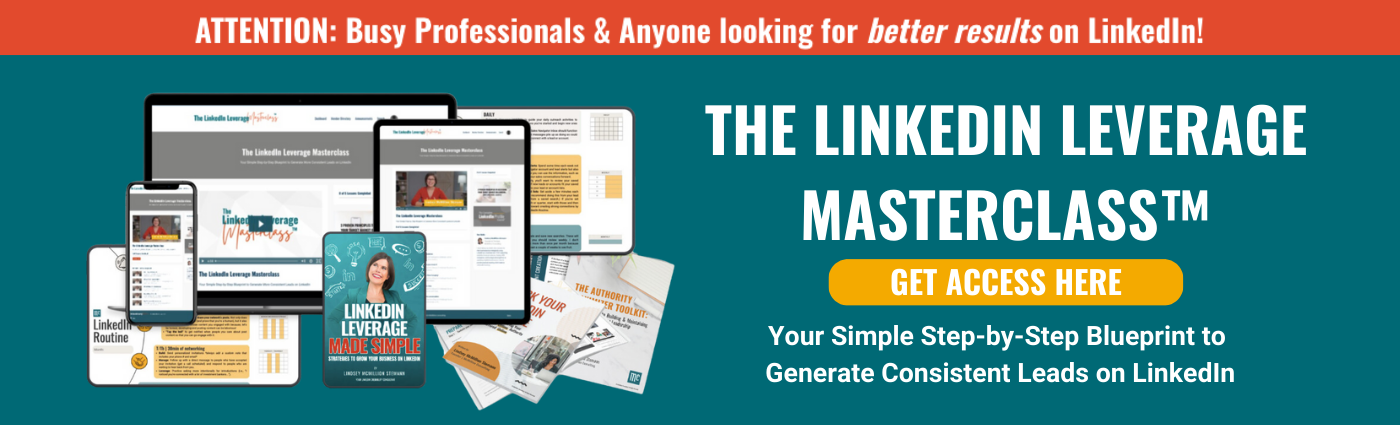
Speaking of the future, I’d love to be one of the people who helps you get where you want to go. If you feel that it can be of service to you, my LinkedIn Leverage Masterclass features a step by step process that leads to new business opportunities by strategically tapping LinkedIn to support your goals. Get access today and you'll receive a toolkit that includes my LinkedIn and Sales Navigator Routine Checklists (yes, a roadmap of exactly how you should be spending your time on the platforms), along with several other amazing bonuses (all included).